Role guide / Seeker
Seeker basics: search rooms in repeatable zones
Replace random scanning with a zone route that catches movement, broken silhouettes, and surfaces that do not belong.
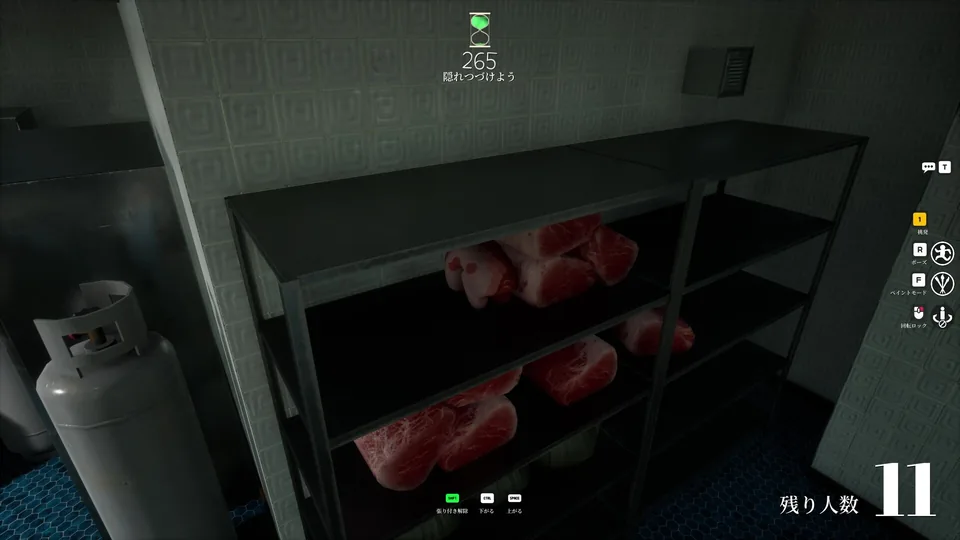
Quick answer
The result you are working toward
Good Seeker play is a coverage problem, not a guessing contest: claim a zone, scan it in a fixed order, investigate specific visual errors, communicate what is cleared, and resume from the last confirmed point when time pressure breaks your route.
By the end, you can
- Divide any room into entrance, perimeter, center, and missed heights.
- Prioritize movement and silhouette errors before subtle color differences.
- Use callouts that prevent teammates from duplicating coverage.
- Recover a lost search route without restarting the whole map.
Use this guide when
- Your team runs together and repeatedly checks the same objects.
- You spot suspicious colors but cannot explain why an object is wrong.
- Late-round pressure turns your camera movement into random scanning.
Evidence boundary
What is verified
The Seeker role and paint-based deception are confirmed by the official listing. The route method is editorial practice rather than an official game mechanic.
Watch before the drills
Build a repeatable room-clearing route
Compare three types of search space and keep the same sequence: entrance, outer wall, central cluster, then missed heights.
Community tutorial
Meccha Chameleon Guide (Tips & Tricks, Best Spots, Tutorial)
Watch real disguises succeed and fail, then pause to identify the exact visual clue that a Seeker could use.
Video by ItzVexo- Shapes that remain readable even when their color is close.
- How camera height changes which edges become suspicious.
- Which rooms reward a fixed sweep instead of random checking.
Split every room into three zones
A fixed route reduces repeat checks and makes it obvious which part of a room still needs attention.
- Clear the doorway and immediate corners before walking into the room.
- Sweep the outer wall clockwise, then inspect the central prop cluster.
- Finish with high, low, and behind-camera angles that were not covered by the first pass.
Look for errors before perfect matches
The easiest disguises to catch usually fail at shape or movement before they fail at exact color.

- Check for long player-shaped outlines cutting across otherwise straight scenery.
- Watch for small motion during camera turns instead of staring at one object for too long.
- Compare repeated props: one different pose, scale, or surface response deserves a second look.
Keep route discipline under time pressure
Late-round panic produces random camera movement and duplicate checks. Use a short reset whenever you lose your place.
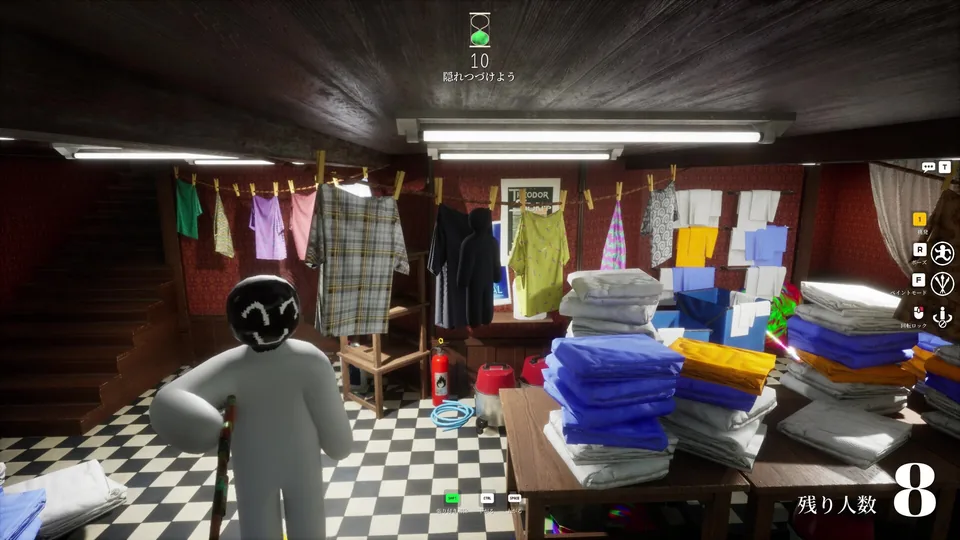
- Stop for one second and identify the last fully cleared doorway.
- Resume from the next uncleared zone instead of restarting the entire map.
- Leave low-confidence objects marked mentally and return only after the room pass is complete.
Situation → read → action
Make the next decision without guessing
Use the live situation to choose one useful response. These are editorial decision rules, not hidden game mechanics.
Door frames and camera turns create immediate blind areas.
Clear near corners and the wall behind the entry, then commit to one perimeter direction.
The strongest clue is often a break in scale, direction, spacing, or count.
Compare the group as a pattern before inspecting one object in isolation.
Low-confidence guesses can consume the entire room pass.
Name the clue, mark the location mentally, complete coverage, then return if time remains.
Repeating the same camera path adds little unless new evidence exists.
Ask which zone and height were covered, then take the missing layer or next connector.
Deliberate practice · 8–12 minutes
One-room coverage drill
Clear one room repeatedly with the same route until you can describe every unchecked layer.
Set up the drill
- Choose a room with at least one doorway, perimeter wall, central prop cluster, and height change.
- Assign one observer to note repeated checks and missed angles.
- Use the same entry point for the first three attempts.
Ignore suspicious details and complete entrance, perimeter, center, high, and low zones.
Pause only when you can name movement, outline, spacing, scale, or material as the clue.
Call each cleared zone so a second Seeker can take a non-overlapping route.
Review the failure
Diagnose the reason before changing everything
Change one likely cause at a time. That turns a failed round into evidence instead of another guess.
You miss Hiders beside the doorway
- Likely cause
- The camera turns toward the room center before the entry blind spots are cleared.
- Next adjustment
- Add a fixed near-left, near-right, and behind-entry check before moving forward.
You inspect too many normal props
- Likely cause
- Suspicion is based on vague color discomfort instead of a ranked clue.
- Next adjustment
- Require one named error—shape, movement, spacing, scale, or surface—before slowing the route.
The team searches one room together
- Likely cause
- No one owns a zone or communicates completed coverage.
- Next adjustment
- Split by connector or room layer and call the last fully cleared boundary.
You lose the route late in the round
- Likely cause
- Fast camera movement erased the distinction between checked and glanced-at areas.
- Next adjustment
- Stop, name the last confirmed doorway, and resume at the next uncleared zone.
Freshness and attribution
Sources used for this file
Keep the guide accurate
Found an outdated detail?
Send the patch, map, and what changed. The report is stored in our private review queue and receives a reference number after a successful submission.
Form unavailable? Email support@meccha-chameleon.co.