Field manual / Advanced
Advanced camouflage: control contrast and attention
Refine a good disguise by controlling contrast, pose readability, camera angle, and the Seeker's attention path.
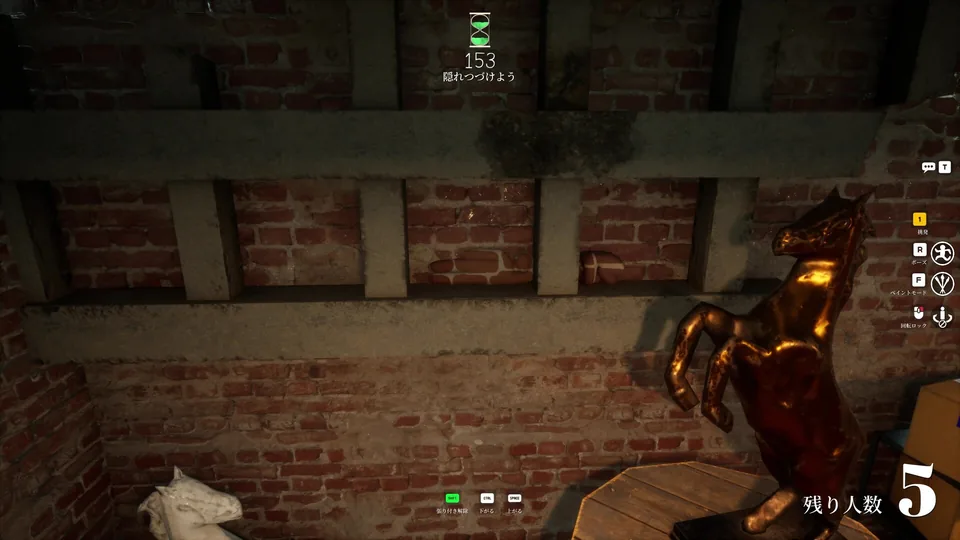
Quick answer
The result you are working toward
Advanced camouflage is not more paint; it is better control of attention. Match the scene's value structure, place body edges on existing boundaries, reduce readable anatomy, and choose a position that sits outside the Seeker's first obvious inspection target.
By the end, you can
- Read a scene as light, dark, edge, and empty-space zones.
- Use pose and camera angle to suppress recognizable anatomy.
- Predict the order in which a Seeker will inspect visual targets.
- Adapt a successful method without repeating a learned location.
Use this guide when
- Basic color matching works, but experienced Seekers still read your outline.
- Your disguise succeeds from one camera angle and fails from another.
- A formerly strong hiding spot has become predictable in the lobby.
Evidence boundary
What is verified
This is an editorial strategy chapter built on the official paint, pose, and spot premise. It does not claim hidden mechanics or guaranteed spots.
Watch before the drills
Compare contrast, pose, and attention
A strong disguise survives more than a color check. Use the three frames to test edge contrast, pose readability, and the Seeker's likely first focus.
Community tutorial
Meccha Chameleon Complete Beginner Guide: Painting Mechanics and Gameplay
Use the painting demonstration as moving evidence for value, surface response, edge cleanup, and silhouette decisions.
Video by Ditech Gaming- The order of base color, correction, and detail work.
- Where a good color match still leaves a readable outline.
- How the final camera angle changes the apparent contrast.
Match the contrast map, not one sampled pixel
A surface usually contains a range of light and dark values. One perfect sample can still look artificial across a full body.
- Identify the dominant mid-tone and the darkest structural line near your position.
- Place body boundaries where the scene already has an edge, seam, frame, or shadow.
- Avoid creating a new bright island in an otherwise muted area.
Reduce pose readability
A pose works when the body reads as part of the scene at a glance, not when it merely looks funny from your own camera.
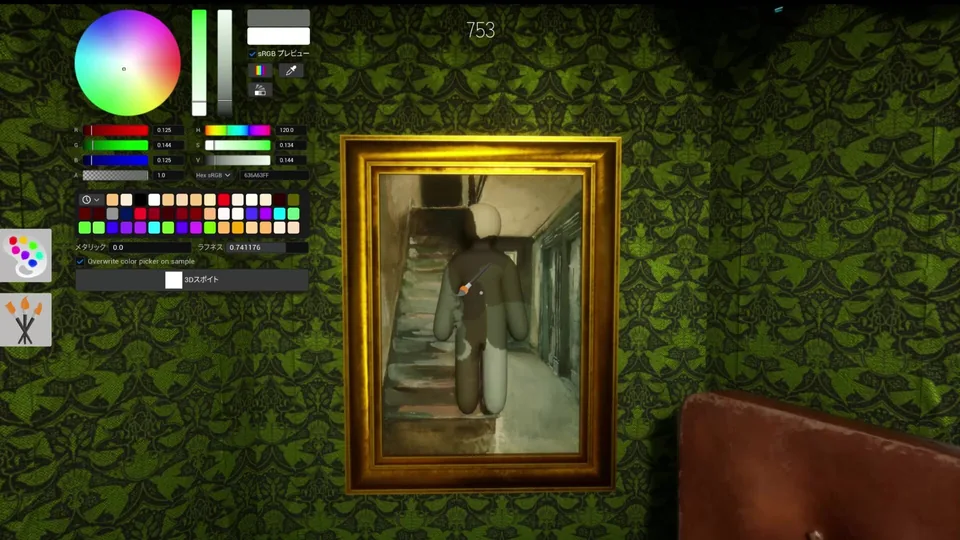
- Rotate until arms and legs overlap nearby visual lines.
- Hide the head shape inside a busier patch rather than leaving it against empty space.
- Test the likely doorway angle and one elevated or low alternative before freezing.
Work with the Seeker's attention path
High-salience props attract the first scan. A strong disguise often sits one step outside that obvious focus point.
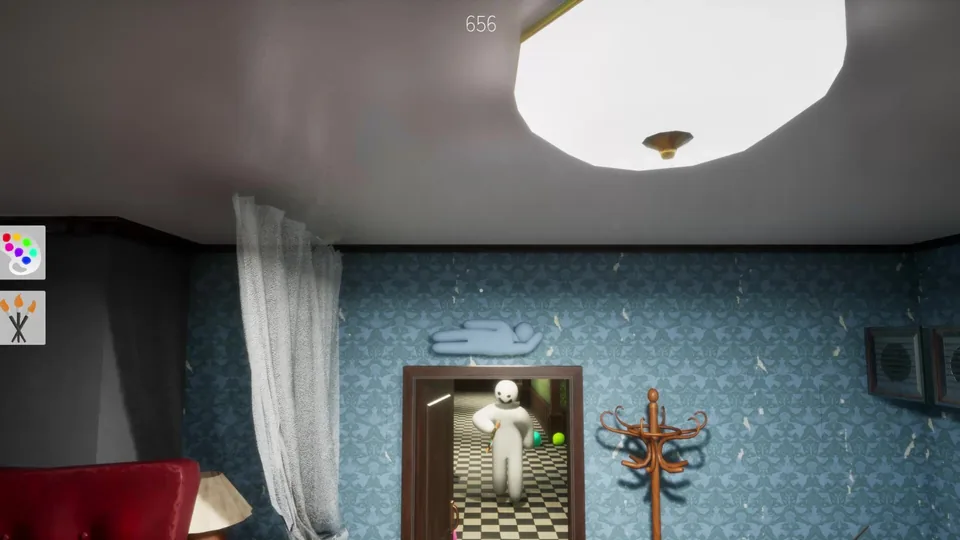
- Identify the object every new Seeker is likely to inspect first.
- Use its visual noise as cover without copying the exact same silhouette.
- If the spot survives a round, assume returning players will check it earlier next time.
Situation → read → action
Make the next decision without guessing
Use the live situation to choose one useful response. These are editorial decision rules, not hidden game mechanics.
Existing edges can absorb body boundaries if pose direction agrees with them.
Place the longest limb or torso edge on the strongest scene line and paint across the transition deliberately.
Small value and silhouette errors remain visible from far away.
Use a smaller visual footprint, a shadow boundary, or a different location instead of adding decorative noise.
The obvious landmark attracts early inspection and shapes the Seeker's camera path.
Use the landmark's visual noise from an adjacent position rather than copying its exact, highly checked silhouette.
Player memory changes the risk even when the environment does not.
Keep the contrast and silhouette method, but rotate surface type, height, or approach angle.
Deliberate practice · 15–20 minutes
Contrast and attention laboratory
Learn which part of a disguise is detected first: value, edge, anatomy, or predictable placement.
Set up the drill
- Choose one room with a clear landmark, one smooth surface, and one patterned surface.
- Use a teammate as observer from a fixed entry point.
- Change only one variable between attempts so the result remains interpretable.
Keep pose and position fixed; compare flat color with a simple mid-tone and shadow split.
Keep paint fixed; move the body boundary onto and away from a scene seam.
Keep the disguise method; compare the obvious landmark with an adjacent secondary focus.
Review the failure
Diagnose the reason before changing everything
Change one likely cause at a time. That turns a failed round into evidence instead of another guess.
Detected from across the room
- Likely cause
- Large value contrast or an isolated body-shaped silhouette.
- Next adjustment
- Fix overall brightness and boundary placement before adding texture detail.
Detected after the Seeker changes angle
- Likely cause
- The disguise was composed for a single camera and exposes depth or anatomy from the side.
- Next adjustment
- Test a second height or approach and reduce separated limbs or unsupported depth.
Detected only by experienced players
- Likely cause
- Predictable spot selection, material mismatch, or learned lobby behavior.
- Next adjustment
- Move outside the first attention target and compare surface response, not only color.
More painting makes the disguise worse
- Likely cause
- Added detail creates contrast that does not continue into the environment.
- Next adjustment
- Return to dominant values and only add lines or patches supported by the background.
Freshness and attribution
Sources used for this file
Keep the guide accurate
Found an outdated detail?
Send the patch, map, and what changed. The report is stored in our private review queue and receives a reference number after a successful submission.
Form unavailable? Email support@meccha-chameleon.co.