Role guide / Hider
Hider basics: build a believable disguise
A repeatable preparation loop for matching the stage, controlling your silhouette, and choosing when to stop moving.
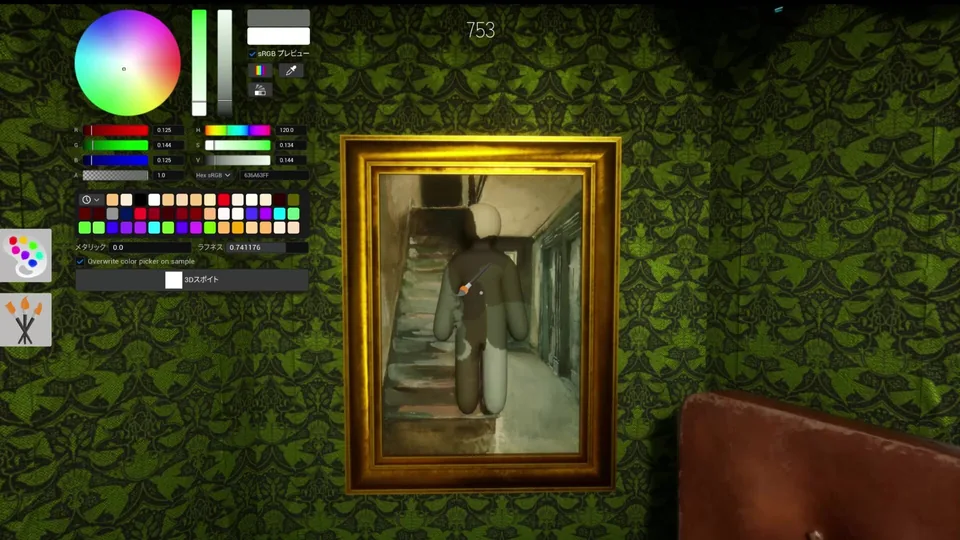
Quick answer
The result you are working toward
A reliable Hider disguise is built in one order: choose a believable location, inspect it from the Seeker's approach, match brightness and material, shape the silhouette with a pose, then stop moving before the search reaches you.
By the end, you can
- Choose a location for the Seeker's first viewing angle.
- Match brightness and surface response before fine color detail.
- Test the full silhouette instead of judging one painted body part.
- Recognize when another adjustment is more dangerous than useful.
Use this guide when
- You are learning the Hider role for the first time.
- Your color looks close but Seekers still identify you quickly.
- You spend the preparation phase painting and run out of time to pose.
Evidence boundary
What is verified
The paint-and-pose premise is confirmed by the official Steam listing. Tactical sequencing is field-guide editorial advice and should be rechecked after major patches.
Watch before the drills
See the hide loop as a three-pass check
Use the same order every round: read the room, match the surface, then check the final silhouette from the Seeker's approach.
Community tutorial
How to Play Meccha Chameleon (2026) | Complete Beginner Guide
Use this beginner walkthrough to connect the written spot, paint, pose, and freeze sequence to a complete round.
Video by GameZilla- When the player chooses a surface before opening paint tools.
- How paint and pose solve different parts of the disguise.
- The moment useful adjustment turns into risky movement.
Read the room before painting
Start with a location that gives your full body a visual job. A good color match cannot rescue a silhouette that has no reason to be there.
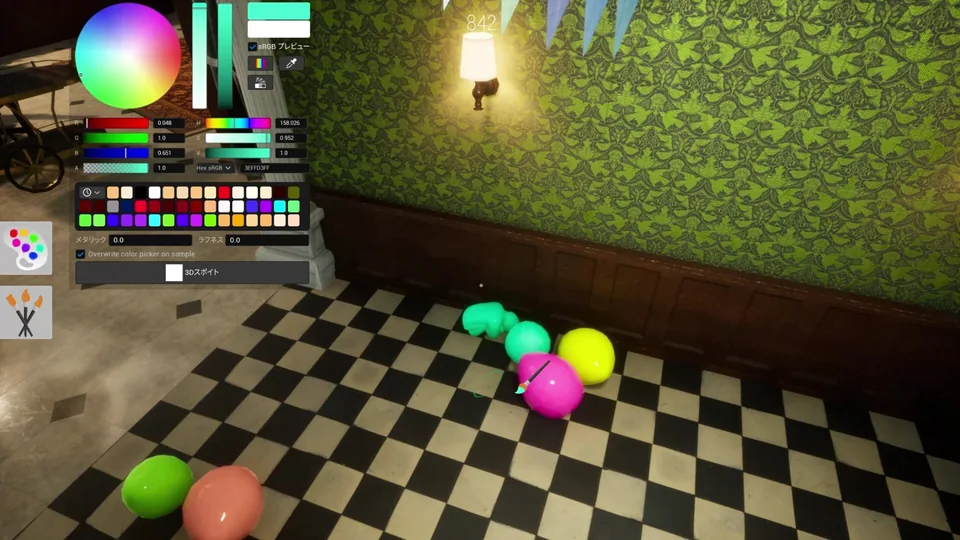
- Choose a surface or prop cluster large enough to contain most of your outline.
- Check the hiding angle from the doorway or route a Seeker is most likely to use.
- Prefer a quiet edge over the center of a high-traffic room until you know the lobby's search habits.
Match color, material, and shape
Community guides consistently separate surface matching from simple color copying. Treat hue, brightness, material response, and body pose as one camouflage problem.
- Sample the dominant mid-tone first, then correct brightness before chasing small hue differences.
- Avoid glossy-looking paint against a flat wall, or a flat result against a strongly reflective prop.
- Use the pose that breaks long arms, legs, or head shapes into nearby visual lines.
Protect the freeze window
Movement is the fastest way to turn a plausible disguise into a readable player. Finish adjustments before the likely search route reaches your zone.
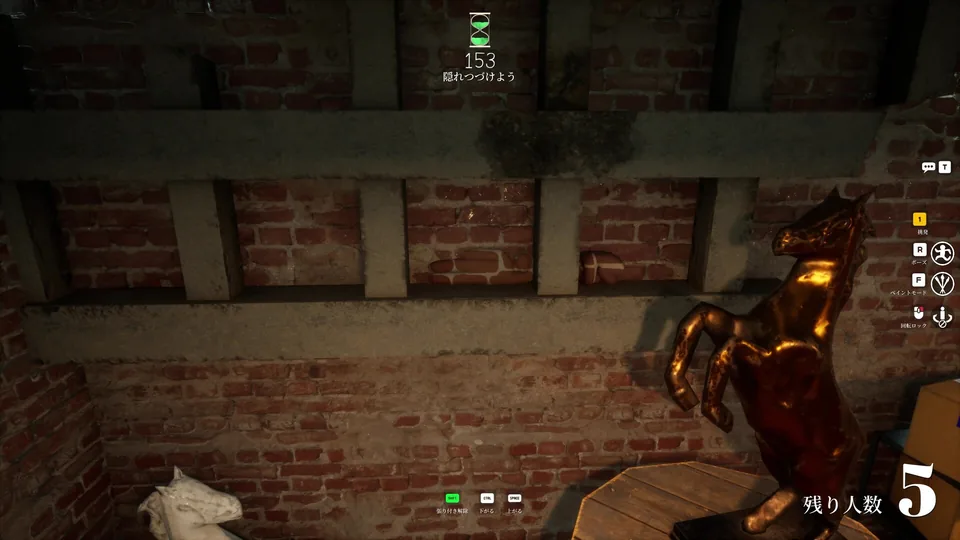
- Make one final camera check, then stop making cosmetic corrections.
- If you must relocate, move while the Seeker is crossing a doorway or facing another zone.
- After moving, repeat the brightness and silhouette check instead of assuming the old paint still works.
Situation → read → action
Make the next decision without guessing
Use the live situation to choose one useful response. These are editorial decision rules, not hidden game mechanics.
Easy to sample, but every body edge is exposed.
Use a wall seam, frame, sign, or shadow boundary to absorb the outline; avoid standing in empty wall space.
Visual noise hides small paint errors but punishes broken pattern direction.
Copy the dominant blocks and align the pose with the strongest lines instead of reproducing every detail.
Clutter can hide limbs, but incorrect scale and depth still look unnatural.
Choose a compact pose and keep the body inside the cluster's existing footprint.
A complete simple disguise is safer than an unfinished detailed one.
Cover remaining bright areas, confirm the doorway silhouette, and freeze; skip decorative corrections.
Deliberate practice · 10–15 minutes
Three-surface hide lab
Build the same spot → paint → pose → freeze loop on three visually different surfaces.
Set up the drill
- Use a low-pressure lobby or practice round where you can revisit the same room.
- Pick one flat surface, one framed or patterned surface, and one prop cluster.
- Judge every attempt from the main doorway before changing the paint.
Use only a base mid-tone and a darker edge; ignore fine texture.
Keep the paint simple and test two different poses from the doorway.
Combine value and shape, then stop adjusting five seconds earlier than usual.
Review the failure
Diagnose the reason before changing everything
Change one likely cause at a time. That turns a failed round into evidence instead of another guess.
Found immediately on room entry
- Likely cause
- The position or silhouette reads as a player before color is considered.
- Next adjustment
- Change the location or pose first; do not spend the next attempt only refining hue.
Seeker pauses, then identifies you
- Likely cause
- Brightness, material response, edge cleanup, or pattern direction fails under inspection.
- Next adjustment
- Compare one suspect property at a time and correct the largest mismatch first.
Disguise is unfinished at hunt start
- Likely cause
- Too much detail work before the body and pose are complete.
- Next adjustment
- Use a hard order: base coat, silhouette, exposed surfaces, then optional detail.
A spot works once but never again
- Likely cause
- The lobby learned the location rather than the disguise becoming mechanically worse.
- Next adjustment
- Reuse the method on a new surface instead of repeating the exact coordinate.
Freshness and attribution
Sources used for this file
Keep the guide accurate
Found an outdated detail?
Send the patch, map, and what changed. The report is stored in our private review queue and receives a reference number after a successful submission.
Form unavailable? Email support@meccha-chameleon.co.